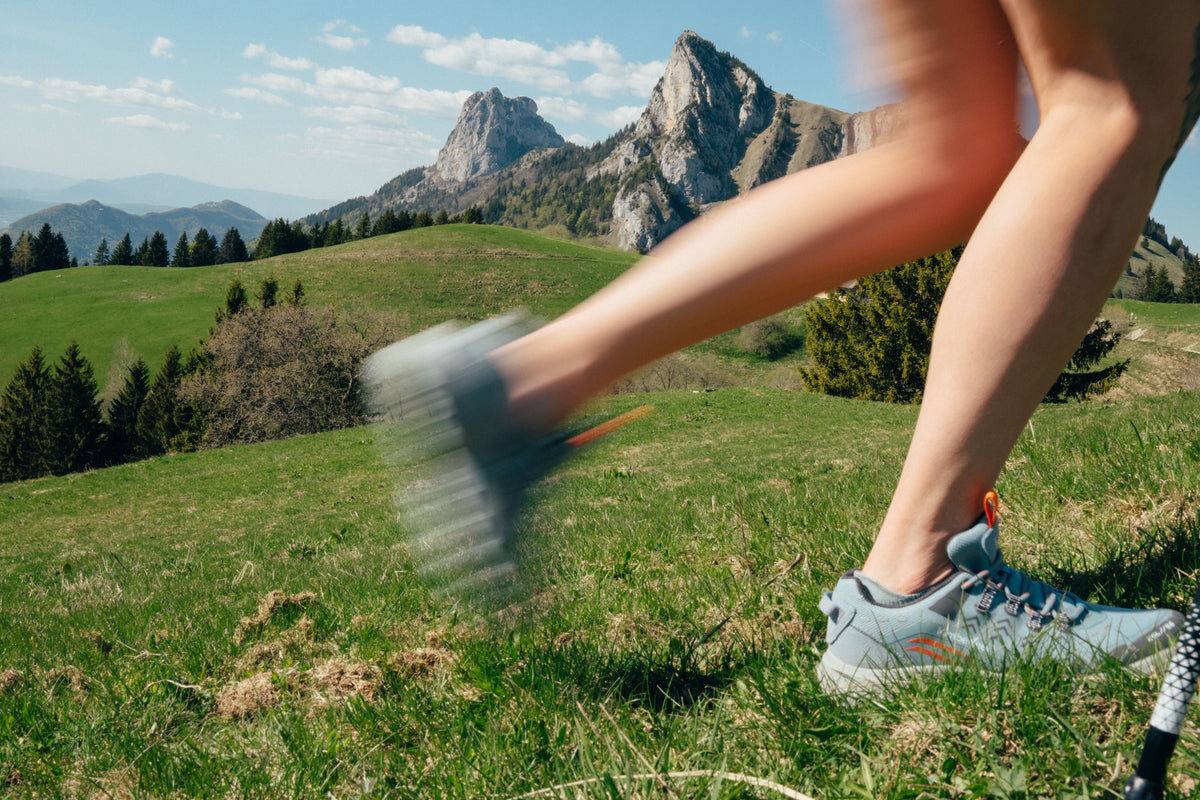

Want to try a mountain refuge adventure this summer? We completely understand. After a day of hiking, there is something quite unique about dropping your bag up there, sharing a meal, sleeping in the heart of the peaks, and setting off the next day with your boots already ready.
In this guide, we explain how to prepare for your night in a mountain refuge, from the different types of accommodation to the essentials to pack in your bag.
How do you choose between a staffed and unstaffed refuge? Where can you find a refuge on your route? Do you need to book? What should you pack? And what exactly is that famous "sleeping bag liner" everyone talks about?
What is a mountain refuge?
A mountain refuge is accommodation located at high altitude or in an isolated area, designed to welcome hikers, mountaineers, and people on long-distance treks.
Unlike a hotel or a traditional gîte, a refuge focuses on simplicity. You often sleep in a dormitory, share common areas, and comfort depends heavily on the location, altitude, and season. Some refuges offer meals, showers, and a staffed welcome. Others are more rustic, providing only the basics for shelter. That is also part of their charm!
Before booking or planning your route, you must therefore understand the type of refuge you have chosen. They do not all offer the same services or the same level of self-sufficiency.
What are the different types of mountain refuges?
The staffed refuge
A staffed refuge is run by a warden during a given period, often during the hiking season. On site, you will generally find dormitory accommodation, a common room, bathroom facilities, and a dining service.
The warden also plays an essential role. They welcome hikers, prepare meals, organize accommodation, and can provide useful information about the weather, trail conditions, or access conditions.
The unstaffed refuge
An unstaffed refuge is accessible without a warden present. It may be a refuge open out of season, an isolated building, or a space left available to hikers. Depending on the refuge, beds or blankets may be available, but you should not count on them without checking before you set off.
This type of refuge is best suited to hikers accustomed to managing their own equipment, meals, and safety. For a first experience, it is best to find out about access, opening conditions, available facilities, and the rules to follow on site.
Pastoral huts, shelters & stage gîtes
Pastoral huts are primarily used by shepherds and for pastoral activities. Some may be accessible to hikers, but this is not always the case. You should always check whether access is permitted before including them in a route.
Shelters are often more basic. They may provide protection in bad weather or a place to take a break, but they are not always designed for a comfortable night's sleep.
Stage gîtes, on the other hand, are often located at lower altitudes or in villages. They generally offer more comfort than an isolated refuge: a bed, shower, meals, and sometimes shared or private rooms. They can be a good option for a long-distance trek, especially if you want to alternate between nights in a refuge and more comfortable stages.
How can you find a mountain refuge to plan your route?
Official refuge websites
In France, the French Federation of Alpine and Mountain Clubs (FFCAM)lists over 300 refuges and chalets. You can search for a refuge by mountain range, name, or location.
The listings often provide useful information: altitude, capacity, warden season, refuge contact details, prices, access, services offered, and a booking link if one is available.
Some refuges also have their own website.
Specialized mapping platforms
Refuges.info is one of the most useful tools for locating mountain accommodation and shelters. The site operates collaboratively: users can add information, such as photos, comments, or updates.
It is a good starting point for identifying possible options in an area. However, you should not stop there. Once you have located the refuge, you should always check the important information with an official source or directly on the refuge website.
Natural park and tourist office websites
National park, regional natural park, and tourist office websites often list accommodation within their area or nearby: staffed refuges, stage gîtes, huts, bivouac areas, or accommodation suitable for long-distance trekking.

What options are available at a refuge?
The basic overnight stay
The basic overnight stay includes only accommodation. Generally, you will sleep in a dormitory or shared room, with a mattress, a blanket depending on the refuge, and access to common areas.
This option is suitable for hikers who want to manage their own meals. It can be practical if you have planned your supplies or want to control the contents of your bag. However, it requires a little more organization: you need to plan what to eat for dinner, have breakfast, and leave with enough energy for the next stage.
Half board
Half board is generally the most practical option for a night in a staffed refuge. It includes the overnight stay, dinner, and breakfast.
It is a good option for hiking with a lighter pack, especially on a multi-day trek. You do not need to carry all your evening food, and you can enjoy a real break after a day of hiking.
Half board also lets you experience the atmosphere of the refuge: shared meals, long tables, and card games.
Full board
Full board generally includes the overnight stay, dinner, breakfast, and a midday meal, often in the form of a packed lunch.
It can be a good option on a route where resupply points are scarce. It helps reduce the weight of your pack and simplifies logistics, especially if you are doing several mountain stages in a row. Not all refuges offer it.
Packed lunch
Many staffed refuges offer a packed lunch for the next day's stage. It is often booked at the same time as the overnight stay or half board.
This is a useful option if you are leaving early, crossing an area without resupply, or do not want to carry too much food from the start.
To avoid unpleasant surprises, remember to mention any dietary requirements or allergies when booking. Refuges may sometimes accommodate them, but they are still subject to supply constraints in the mountains.
Should you book your night at a refuge?
Yes, it is best to book your night at a refuge. Especially in summer, during weekends, school holidays, or on popular routes.
A mountain refuge has limited capacity. Dormitory beds fill up quickly, and wardens must plan meals, accommodation, and the arrival of hikers. Booking helps you avoid an unpleasant surprise at the end of the day…
Can you sleep at a refuge without booking? Sometimes, yes. But it is not a good idea to leave it to chance. A staffed refuge may be full. An unstaffed refuge may also already be occupied, closed, or less equipped than expected. In any case, it is best to check the conditions before you set off.
If you need to cancel, let the refuge know as soon as possible.
What should you pack for a night at a refuge?
Essentials for sleeping
For a night at a staffed refuge, bring a sleeping bag liner at a minimum. It is often required for sleeping in dormitories, even when blankets are available on site.
Add a dry set of clothes for the night, a pair of clean socks, and a warm layer that is easy to put on in the evening. At altitude, the temperature can drop quickly, even after a day spent hiking in a T-shirt.
Also remember to pack a pair of recovery sandals in your bag. After several hours in hiking boots, your feet will appreciate a little breathing room. It is also more comfortable for walking around the refuge without having to put your boots back on every time.
Earplugs can also save your night. In a dormitory, between very early wake-ups, rustling bags, and snoring like a snuffling marmot, it is best not to count too much on silence.
To pack:
✔ a sleeping bag liner (also called a "sleeping bag liner")
✔ a dry set of clothes for sleeping
✔ a warm layer
✔ clean socks
✔ a pair of recovery sandals
✔ earplugs
✔ a headlamp
For an unstaffed refuge, add a sleeping bag suitable for the season. Blankets are not always available, and when they are, their condition may vary.
Essentials for hygiene
Pack a small toiletry bag with the essentials: toothbrush, mini toothpaste, toilet paper, tissues, hand sanitizer, and a small microfiber towel. If you bring soap, choose a biodegradable product and use it away from natural water sources.
Also bring a small bag for carrying your waste back down. In the mountains, nothing really disappears. Even small wrappers, wipes, or tissues must come back with you.
To pack:
✔ a toothbrush
✔ mini toothpaste
✔ toilet paper
✔ tissues
✔ hand sanitizer
✔ a small microfiber towel
✔ biodegradable soap if needed
✔ a bag for waste
Essentials for eating and drinking
Even if you plan to eat at the refuge, always carry enough to keep you going during the stage: energy bars, dried fruit, biscuits, a sandwich, or snacks that are easy to eat while walking. Arriving later than expected, a sudden bout of fatigue, or weather that slows you down can quickly change your plans.
Also consider reusable cutlery. It takes up almost no space, avoids unnecessary waste and can be used for a picnic, a more substantial snack, or a meal you prepare yourself.
Regarding water, set off with a water bottle or hydration pack suitable for your route. Not all refuges necessarily have access to drinking water, especially outside the warden season. A filter or purification tablets may be useful depending on the area.
If you need to plan your own meal, check the facilities available on site and the refuge rules beforehand.
To pack:
✔ a water bottle or a hydration pack
✔ snacks for the stage
✔ a meal if you need to be self-sufficient
✔ reusable cutlery
✔ a filter or purification tablets depending on the route
✔ a stove (only if permitted)
Essential safety items
Even if you sleep at a refuge, you are still in the mountains. The weather can change quickly, the network may disappear, and a stage may take longer than expected.
Always keep in your backpack a waterproof jacket, a warm layer, a first aid kit, an emergency blanket, a map or an offline GPS app, and a power bank. A headlamp is also essential for moving around the refuge in the evening or managing a late arrival.
Also remember to bring cash. Some refuges do not accept bank cards, especially depending on their location or the quality of the network. An ID card, your booking confirmation, and useful phone numbers can also save you a few close calls.
To pack:
✔ a waterproof jacket
✔ a warm layer
✔ a first aid kit
✔ an emergency blanket
✔ a paper map or an offline GPS app
✔ a power bank
✔ a headlamp
✔ cash
✔ an ID card
✔ your booking confirmation
✔ emergency and refuge phone numbers
In the mountains, self-sufficiency is part of comfort.
Refuge or bivouac: which should you choose?
Between a night at a refuge and a night bivouacking, there is no real best choice. It is mainly a different experience.
A refuge offers a simpler setup. You sleep under a roof, carry less equipment, and find a real landmark at the end of the stage. It is often the most comfortable option for a first night in the mountains or a multi-day trek.
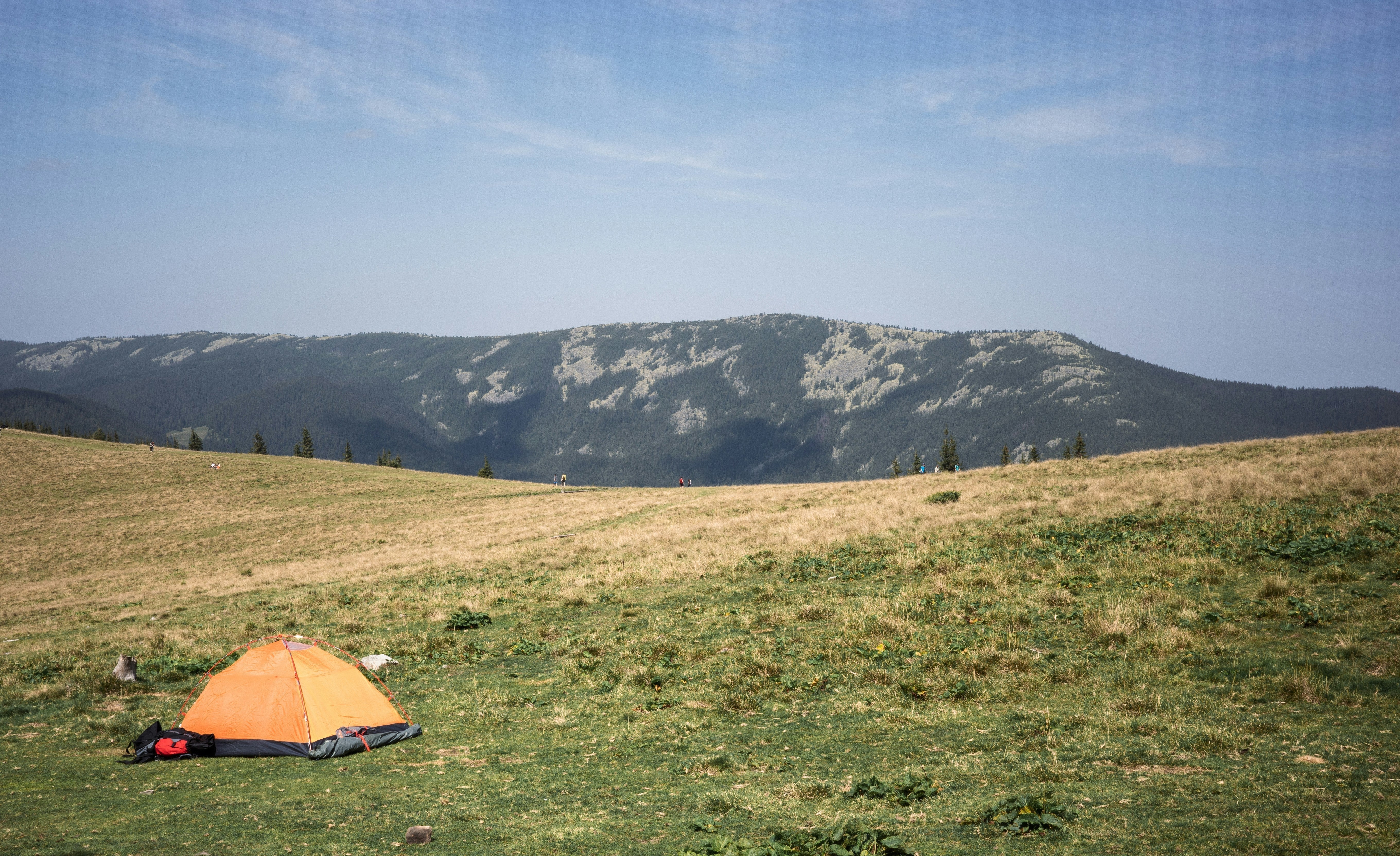
Bivouacking offers another way to experience the mountains. You choose your spot for the night, set up camp, enjoy the settling calm, and wake up already outdoors, right in the heart of the landscape. For those who love independence, it is a truly unique experience.
When staying in a mountain refuge, you travel lighter and join a place designed to welcome hikers. When bivouacking, you carry your own "little refuge" in your backpack: everything you need to sleep, eat, protect yourself from the cold, manage your water supply, and deal with the weather.
You must also check the regulations. Bivouacking is not allowed everywhere, especially in certain protected areas. Rules vary depending on the mountain range, park, municipality, and time of year. Before planning a night outdoors, it is best to check local information.
For a first experience, a mountain refuge is often the most reassuring choice. For a more independent outing, with the right equipment and a good understanding of the terrain, bivouacking can offer a true moment of disconnection.
Want to learn more about bivouacking? Check out our complete guide: Bivouacking, the rules to know in France
Ready to spend the night up there?
On the trails, whether going uphill, downhill, or covering the final few meters before you arrive, Kimberfeel is with you with hiking shoes, designed for comfort and mountain adventures.
This summer, all that is left to do is choose your route, pack your bag, and set your sights on the next refuge. The peaks will take care of the scenery.
Choose your way.